
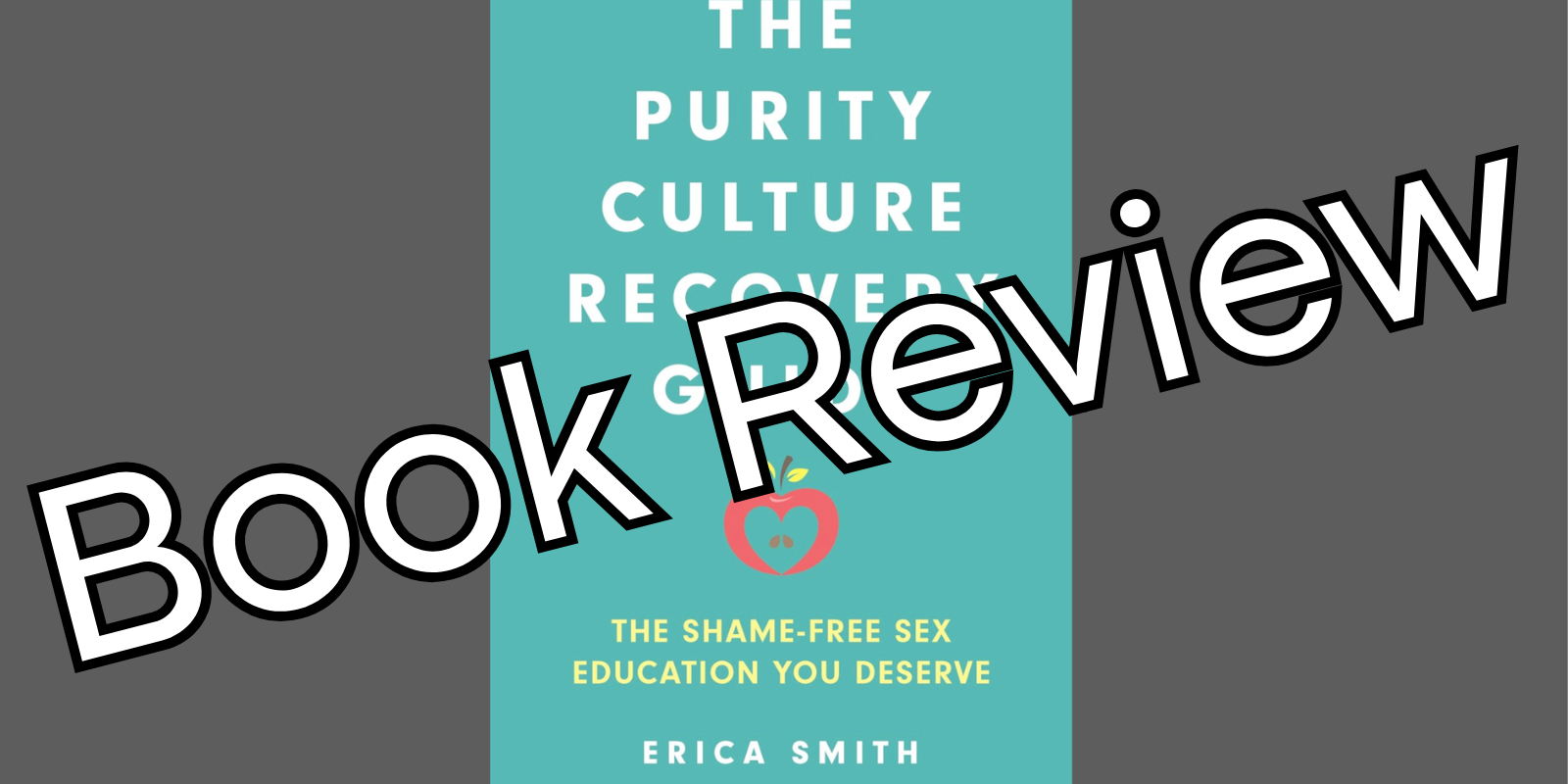
If you’re reading this, you likely already know that purity culture has had an insidious impact on multiple generations of folks raised on high-control religion. If you’re one of these people, and you’re starting to recognize the profound effect it has had on you and your sexuality, you’re not alone. With purity culture’s far-reaching effects in mind, Erica Smith has given us a stellar guide for navigating our way out of sexual shame in The Purity Culture Recovery Guide.
Smith, a sex educator for 25+ years, has spent the last seven years specifically helping survivors of purity culture. She differs from many of the therapists, coaches, and writers in the religious trauma space in that she didn’t personally experience purity culture or high-control religion. This difference comes across as a strength, not a negative, when addressing the topic at hand. She has an undiluted, real-world perspective on sex and sexuality that is grounded in science, professional experience, and sociology, not in dogma. Though the tone is unapologetic, everything in this guide is delivered with tremendous warmth and compassion. It’s also super easy to read. She writes with a voice that is just chatty enough, without sacrificing a well-earned sense of authority and expertise.
In addition to defining and exploring purity culture, The Guide provides the reader a rich education on everything sex-related, from basic anatomy to choosing lube. Smith also delves into topics like gender, sexual orientation, abortion healthcare, dating, and sex work. It’s a tremendously comprehensive handbook for those that never got to attend real sex ed, and/or may have limited (or no) experience in the bedroom. There are ten pages just about birth control. I suspect the vast majority of people (who are not sexual health professionals) will learn something new from this book.
Smith includes statistics and reference-rich info that might be contrary to (or glaringly absent from) what most purity culture survivors were taught. She clears up misconceptions and offers helpful frameworks for exploring and accepting one’s sexuality. For example, she debunks the idea that types of desire and arousal occur exclusively based on one’s (binary) gender. She instead explains things in terms of “spontaneous desire” and “responsive desire,” which can exist in anyone of any gender.
One of my favorite things about this book is the deliberate space created for the reader to identify their own sexual values. For purity culture survivors, rules about sex were narrowly specific and uncompromising. We were taught that there was one way to do things, and anything else was sinful and wrong. The idea that every individual is allowed to decide their own boundaries and preferences will, for some, be a new concept. In high-control religion, people are often led to believe that without purity culture rules, it’s just amoral, chaotic sexual mayhem out there. Here we see another option: alternate codes of conduct can exist, and you get to write your own. If you want to save intimate sexual behavior for a marriage or a committed relationship, that’s totally okay. If you want to explore casual encounters, that’s okay too. She does caution
Don’t create a new standard for yourself that swings the pendulum in the opposite direction…Don’t pressure yourself to do things that you don’t really want to do just because they seem like the opposite of purity culture.
The focus is on being thoughtful as you sort out your own values, fill in any information gaps, and keep yourself healthy and safe. She provides multiple thought exercises and journal prompts to help the reader explore their own personal ethics around sex.
I honestly don’t have anything negative to say about this book. The Purity Culture Recovery Guide is comprehensive, authoritative, well-written, and accessible. Smith’s treatment of this delicate (but crucial!) subject is done with kind respect for the reader and she makes it all easy to digest. It is, as the subtitle says, “the shame-free sex education you deserve.” I suspect this book will be widely recommended by religious trauma therapists everywhere.